5 things Zapier, n8n and Make can't do — and why that's not a bug
On this page
Zapier, n8n and Make are good at what they were built for: move data from app A to app B when something happens. That is most automation, and they do it well.
The five things below are not “missing features” you file a ticket for. They are things that need a different engine underneath, which is why none of these tools has shipped them in a release and probably won’t in the next one either.
1. A run that survives you unplugging it
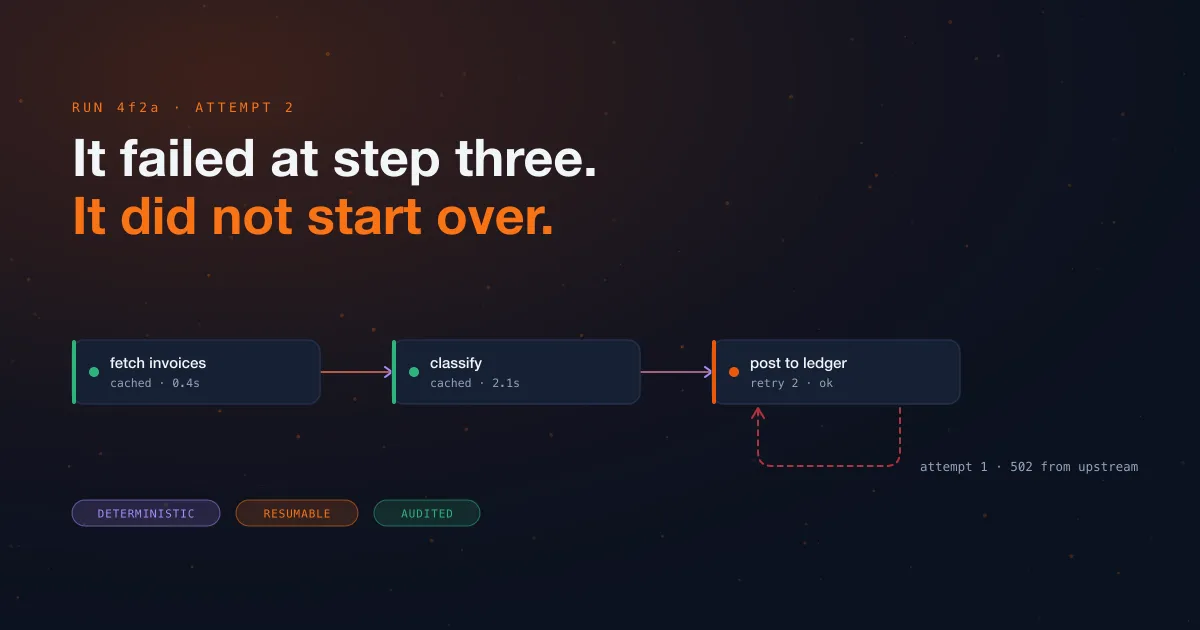
Picture automation as a phone call. If the call drops, the conversation is gone — someone has to redial and start over. That’s how a task-runner treats a workflow: the whole thing lives inside one execution, in one process’s memory, for as long as it takes to finish.
Fine, if it finishes in four seconds. Not fine when an agent is waiting three days for a human to approve an invoice, and the worker holding that wait restarts for any reason at all — a deploy, a crash, a Tuesday.
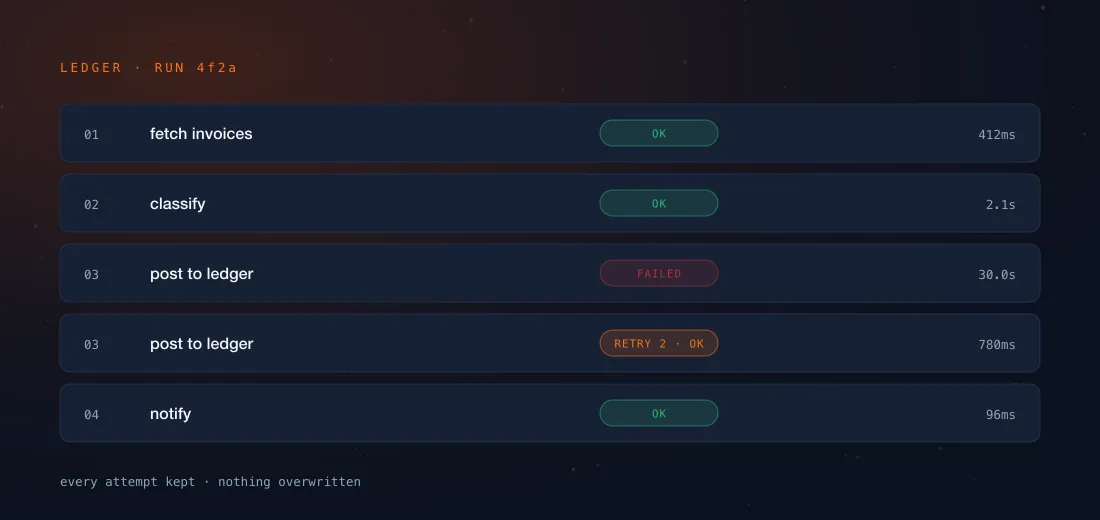
Tamtree runs on a durable execution engine, so a run’s state lives outside any process that happens to be executing it. Think autosave in a video game, not a phone call: the worker is a temporary employee, the run is the file.
2. A guardrail that can actually say no
Ask any of these tools what stops their model node from leaking a customer’s SSN, and the honest answer is a sentence in the prompt: “do not include personal data.” That’s not a control, it’s a sign taped to a door asking people to behave. The model can decline the request, and there’s no event anywhere when it does — the failure is invisible to the run and to you.
A guardrail that runs in the engine, between the model and the world, is a
bouncer instead of a sign. It can redact the SSN before the call goes out,
block a prompt-injection attempt, or escalate a judgement call to a human
mid-run — and every one of those is a recorded event, not a hope.
3. A change that can be refused before it ships
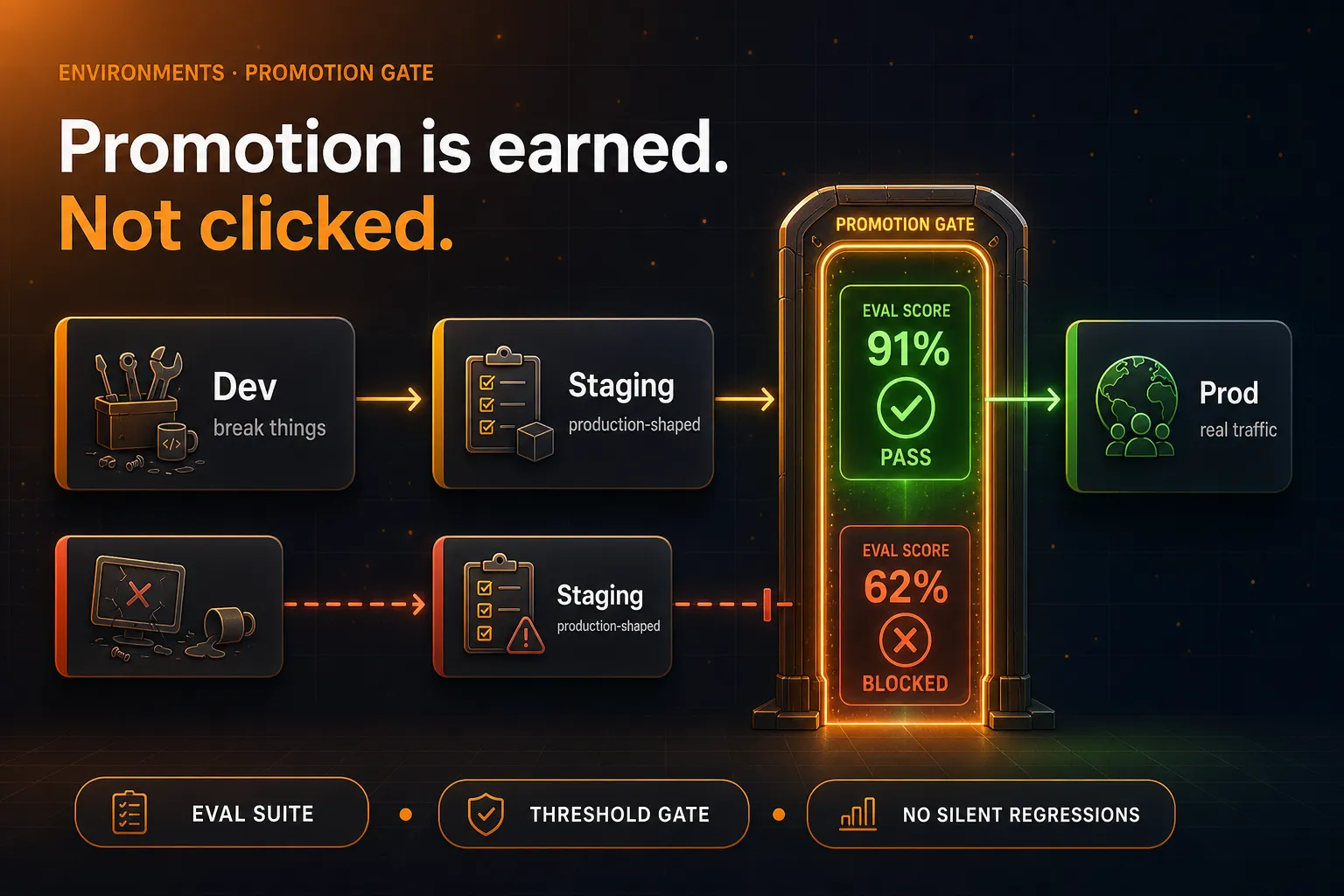
Every platform in this category can show you a dashboard of how your agent has been performing. Almost none of them can refuse to let a bad version out the door.
A dashboard is a spellchecker: it underlines the mistake after you’ve already hit publish. A promotion gate is an editor who reads the draft first and sends it back. Tamtree scores a new prompt or workflow version against a suite of cases before it ever reaches production traffic — regress, and it doesn’t ship. That’s the difference between noticing a regression and preventing one, and it’s the difference between a support ticket and a headline.
4. Deterministic and autonomous, in the same workflow
Most tools make you pick a side once and live with it: a fixed flowchart, or an agent that decides everything. Real work is rarely all one or the other — it’s a recipe for the parts you understand, and a chef improvising for the parts you don’t, in the same kitchen.
Pipeline
Fixed, author-defined steps. Cheap, predictable, boring in the good way.
Crew
A lead agent decides each turn. Slower, pricier, and worth it when judgement is the actual job.
In Tamtree a pipeline step can be a crew, and a crew can call a pipeline as a tool — both sharing the same run, the same ledger, the same guardrails. You stop choosing determinism or autonomy for the whole system and start choosing it per step, which is what the work actually looks like.
5. Reach you don’t have to rebuild
Nobody entering this category in 2026 is going to out-build a decade of connectors, and pretending otherwise is how a good idea turns into a lost year. So Tamtree doesn’t rebuild the socket — it standardises on it. It’s MCP-native: it consumes any MCP server as tools, and exposes its own workflows as MCP tools right back. USB-C, not a drawer of proprietary chargers. The n8n or Zapier workflow you already trust isn’t something you migrate off — it’s something Tamtree calls.